How to Issue a Correct Tax Invoice
Issuing a proper tax invoice matters for both sides of a sale. The buyer needs it to claim a GST credit, and the seller needs to get the details right to avoid disputes or ATO scrutiny. Here’s what a valid tax invoice needs to contain.
When you need to provide one
If you sell a taxable good or service worth more than $82.50 (including GST), you must provide a tax invoice to a GST-registered customer so they can claim their GST credit. If a customer asks for one, you must provide it within 28 days of the request.
Sales under $1,000
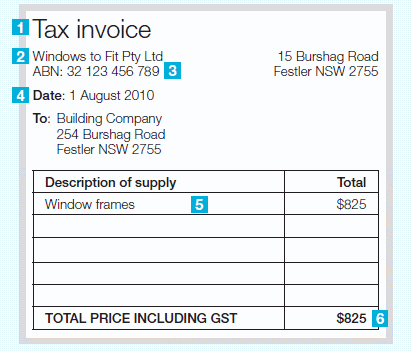
A tax invoice for a sale under $1,000 must clearly show these seven things:
- That the document is intended as a tax invoice
- The seller’s identity (business name)
- The seller’s ABN
- The date the invoice was issued
- A brief description of what was sold, including the quantity (where applicable) and price
- The GST payable, either shown separately or as “Total price includes GST” if the GST is exactly 1/11th of the total price
- The GST-inclusive total for each sale line
Example, sale under $1,000:
Example, sale over $1,000, itemised:
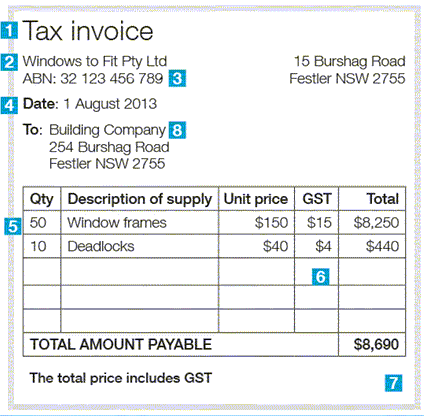
In the first example, “Total price includes GST” on its own satisfies point 7. In the second, GST is broken out per line item and the total also states it includes GST. Either approach is fine, as long as it’s clear.
Sales of $1,000 or more
On top of the requirements above, an invoice for a sale of $1,000 or more must also show:
- The buyer’s identity or ABN
A tax invoice that meets the $1,000-and-over requirements is also valid for sales under $1,000.
Sales under $82.50
For a sale of $82.50 (including GST) or less, a simpler record is enough. A cash register receipt, sales docket, or invoice will do as evidence for a GST credit claim.
Getting invoicing right protects both you and your customers if the ATO ever asks questions. If you’d like us to check your invoice template, get in touch.